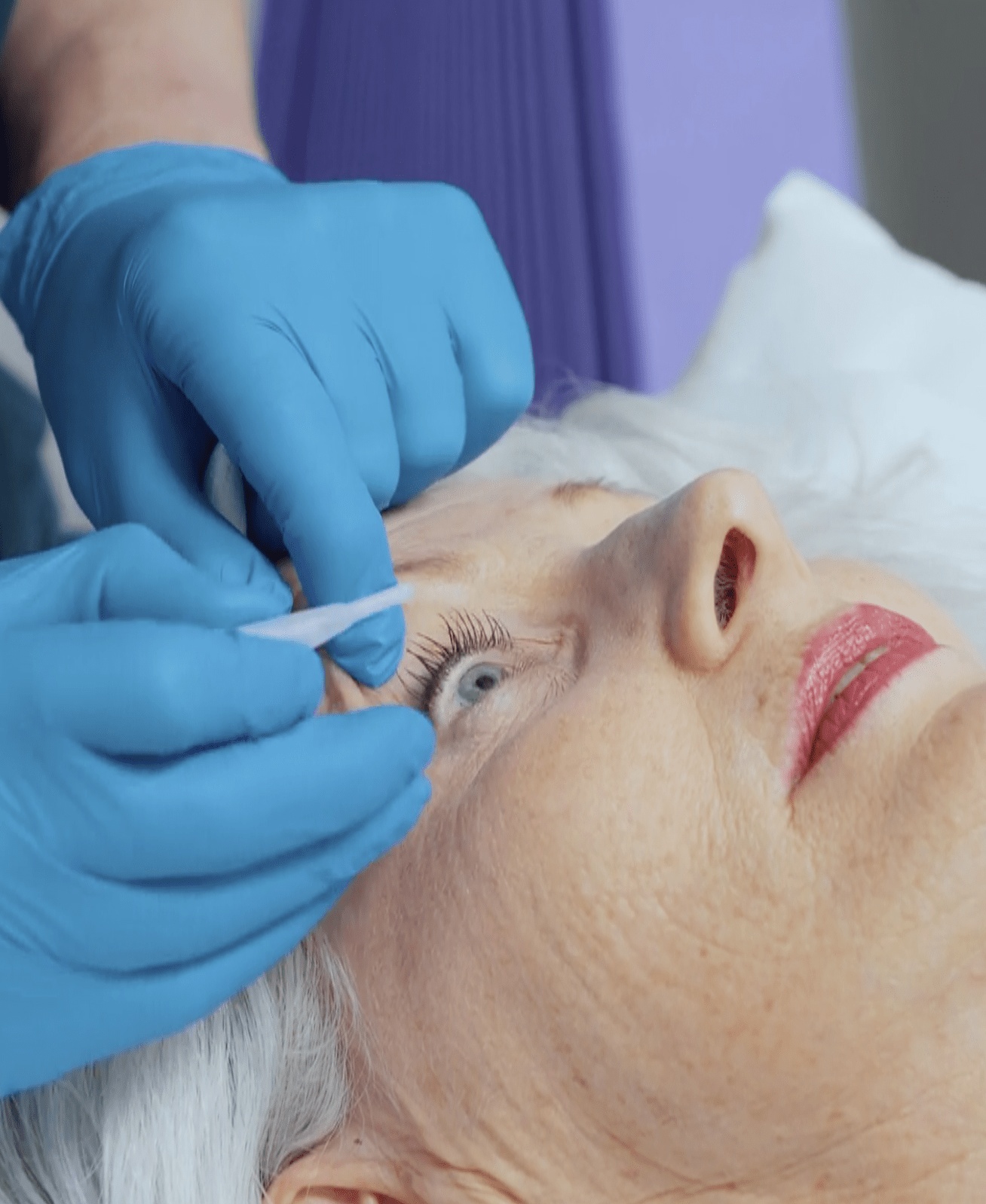
Ophthalmology · Medical Retina

Age-related Macular Degeneration

Rapid-access, consultant-led AMD assessment and treatment

We provide advanced assessment and treatment for Age-Related Macular Degeneration (AMD) — one of the leading causes of sight loss in people over 50. Our ophthalmology team offers rapid-access appointments, state-of-the-art diagnostic imaging and a private AMD injection service using trusted anti-VEGF medications.

Age-related macular degeneration assessment
Rapid accessfast specialist appointments
Consultant-ledretinal-disease expertise
HD OCT imagingdetects the earliest changes
Clean-room theatrestrict safety standards

What is AMD?

The macula and central vision

AMD is a common eye condition affecting the macula — the small area at the centre of the retina responsible for sharp, central vision. It can make everyday activities like reading, driving and recognising faces more difficult.

There are two main types, and knowing which you have shapes the right treatment plan.

Dry (atrophic) AMDCaused by gradual thinning of the macula. Vision loss tends to develop slowly over time.
Wet (neovascular) AMDCaused by abnormal blood vessels growing under the retina that can leak fluid or blood. This form progresses quickly and needs prompt treatment.

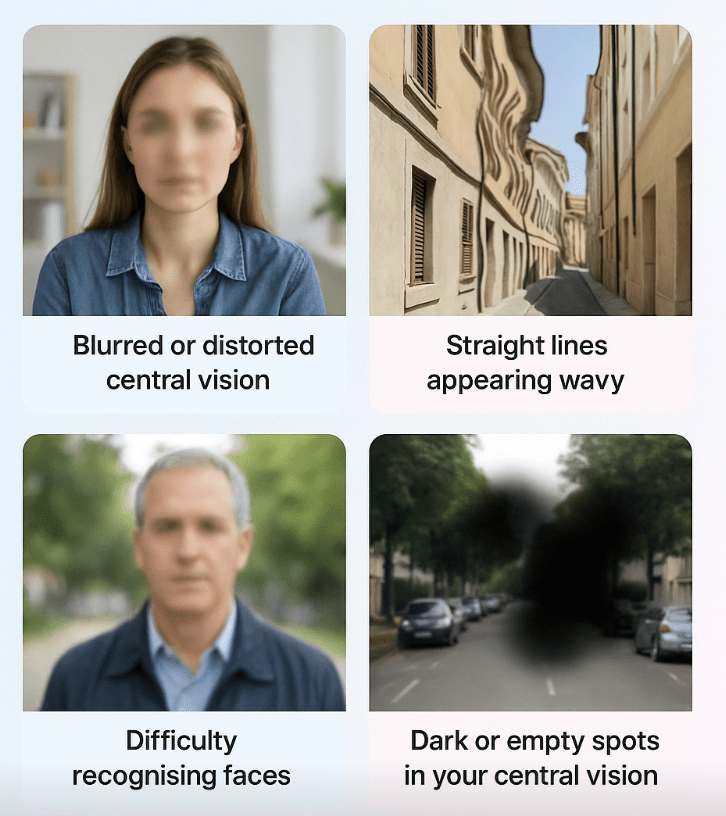
Symptoms to look out for

If you notice any of these, seek specialist advice promptly — early diagnosis and treatment are essential to preserving your sight.

Blurred or distorted central vision
Straight lines appearing wavy
Difficulty recognising faces
Dark or empty spots in central vision
Reduced contrast or colour perception

How AMD is diagnosed

Our consultants use high-definition OCT (Optical Coherence Tomography) and detailed retinal imaging to detect even the earliest changes in the macula — so we can act quickly where it matters.

Your assessment includes:
OCT retinal imaging
Comprehensive eye examination
High-definition OCT retinal scan
Consultant ophthalmologist review
Discussion of your results and a personalised treatment plan

AMD treatment

AMD injection treatment in a clean-room theatre

For patients with wet AMD, the most effective treatment is a series of intravitreal injections using anti-VEGF medications. These work by blocking abnormal blood-vessel growth and reducing leakage in the retina.

Injections are typically given every 4–8 weeks, with the frequency tailored to your condition. Starting treatment as soon as symptoms begin gives the best chance of protecting your vision.

Our AMD injection service is

Delivered by consultant ophthalmologists experienced in retinal disease
Performed in our clean-room theatre under strict safety and infection-control standards
Comfortable and efficient — usually taking just a few minutes
Followed by post-treatment monitoring and ongoing visual assessments
If you’ve been diagnosed with macular degeneration or are concerned about your vision, our friendly team is here to help. We accept referrals from optometrists and GPs, as well as self-referrals.

Your consultant surgeon

Mr Muralidharan R. Upendran

Mr Muralidharan R. Upendran

Consultant Ophthalmologist

Your AMD assessment and treatment are led by Mr Muralidharan R. Upendran, a consultant ophthalmologist experienced in retinal disease and the medical management of macular degeneration — delivering your care with precision, safety and a personal touch.

Find out more ›

AMD FAQs

What is the difference between dry and wet AMD?
Dry (atrophic) AMD develops slowly as the macula gradually thins, while wet (neovascular) AMD is caused by abnormal blood vessels leaking under the retina and can progress quickly. Wet AMD needs prompt treatment, which is why early assessment matters.
Are the injections painful?
The eye is numbed with anaesthetic drops beforehand, so the injection itself is usually very quick and well tolerated. Most people feel only mild pressure or a brief sensation rather than pain.
How often are injections needed?
For wet AMD, anti-VEGF injections are typically given every 4 to 8 weeks, though the frequency varies from person to person. Your consultant will tailor the schedule to how your eye responds.
Can AMD be cured?
There is currently no cure, but treatment can slow progression and, in many cases of wet AMD, help maintain or improve vision. Starting treatment early gives the best chance of preserving your sight.
Can I refer myself?
Yes. We accept self-referrals as well as referrals from optometrists and GPs, so you can get rapid-access specialist assessment without waiting.

Protect your central vision

Rapid-access, consultant-led AMD assessment and treatment. If you're concerned about your vision, don't wait — early care makes the difference.

Book a consultation Contact the team

This page provides general information about age-related macular degeneration and is not personal medical advice. Treatment, including anti-VEGF injections, is provided where clinically appropriate following consultant assessment. If you notice sudden changes in your vision, seek specialist advice promptly.

CONTACT us to start your journey TODAY

Contact Form

Book a consultation and let’s see if now’s the right time for cataract surgery